Everything is a system, but not every system is yours.
My obsession with architecture began in 1989. It started with a few lines of basic code- my first program. It was a primitive interaction, but it revealed a fundamental truth: you can build your own world if you understand the logic behind it.
By 1996, I had moved that logic to the web. My first site wasn't for myself; it was for friends running a mountain hostel. Even then, I was fascinated by how a digital space could capture the spirit of a physical place. Since those early days in the mountains, I have lived through the rise and fall of design languages, the evolution of code, and the aggressive shift toward social media.
I watched as the industry moved away from personal digital architecture and into the crowded, rented spaces of third-party platforms. We were told that visibility was everything. We were told that the feed was the future.
They were wrong.
The Illusion of Visibility
Social media is a powerful tool for accidental attention. It is built for the quick thought, the fleeting glance, and the 24-hour cycle. It is effective for noise, but it is a poor environment for intent.
When you exist solely on social media, you are a tenant. You don't own the walls, you don't control the lighting, and you certainly don't decide who walks through the door. You are subject to the algorithm - a system designed for the platform’s growth, not yours.
The Architecture of Freedom
A website is different. A website is a declaration of independence.
It is the only space where you are the sole creator. You decide the geometry. You decide the rhythm. You control the experience from the first pixel to the final interaction. Whether it’s a streamlined technical presence or an immersive deep-dive into a conceptual project, the website allows you to talk with the viewer, not just at them.
It is the difference between a billboard on a crowded highway and a private gallery. One is for the masses; the other is for the client.
Beyond the Finish Line
For years, like many creators, I put my own digital home last. I was too busy building systems for others to refine my own.
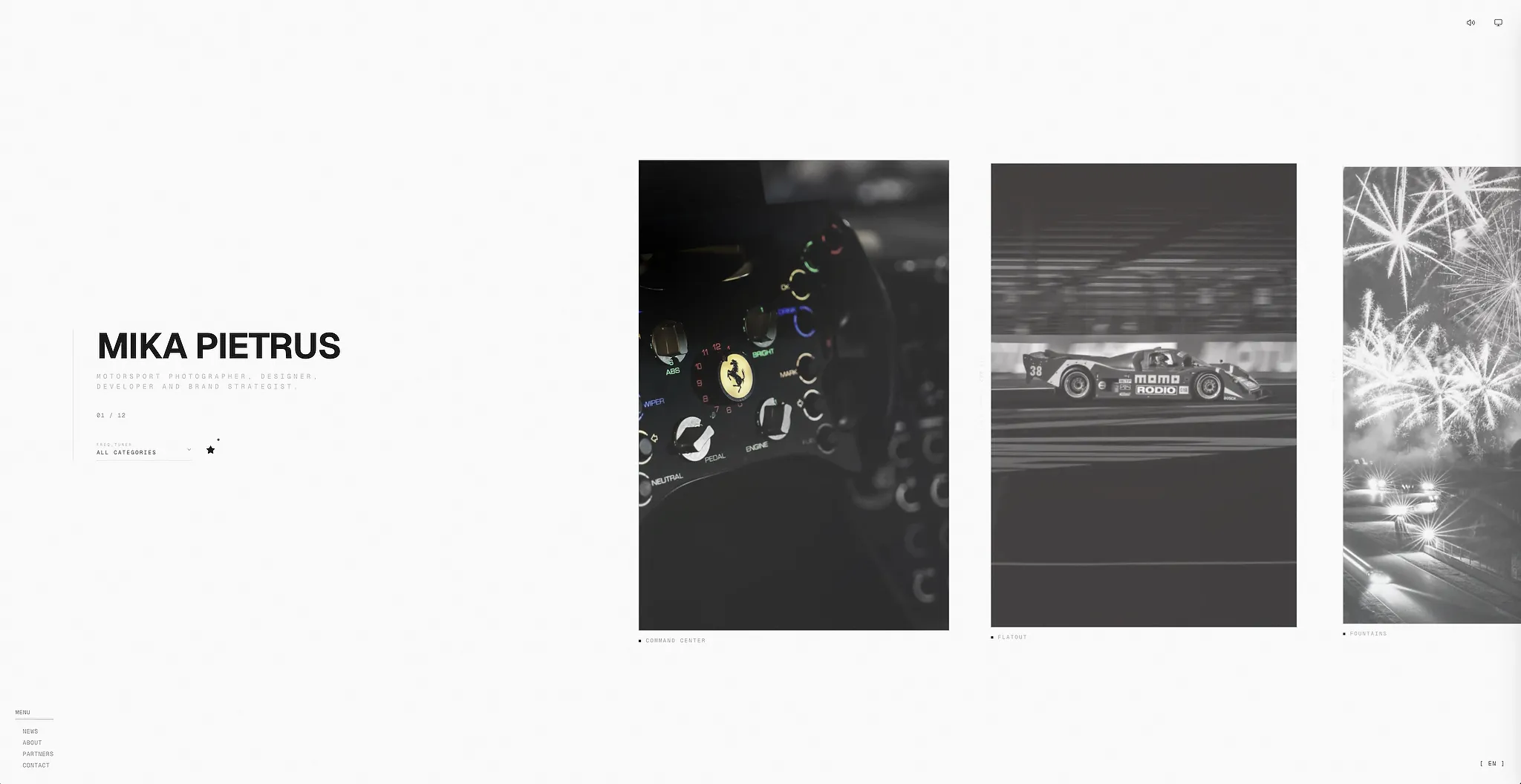
But after weeks of heavy development and a refusal to compromise, I have finally finished. For the first time, I have built a digital space that reflects my actual operating system. It isn’t just a portfolio; it’s an ecosystem of speed, art, and engineering.
I’m not just proud of the result - I’m proud of the discipline it took to get here.
The system is live. You're invited.