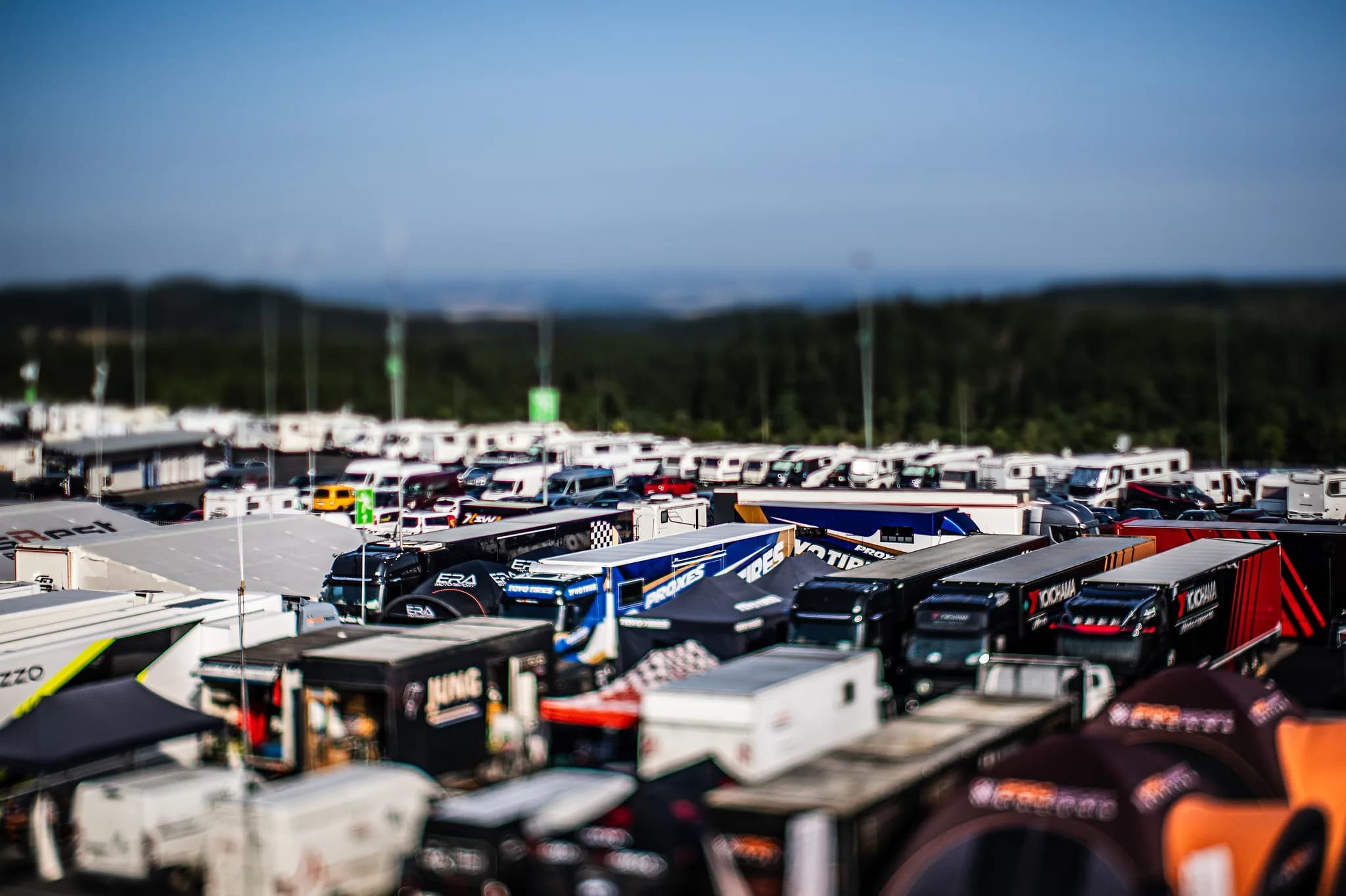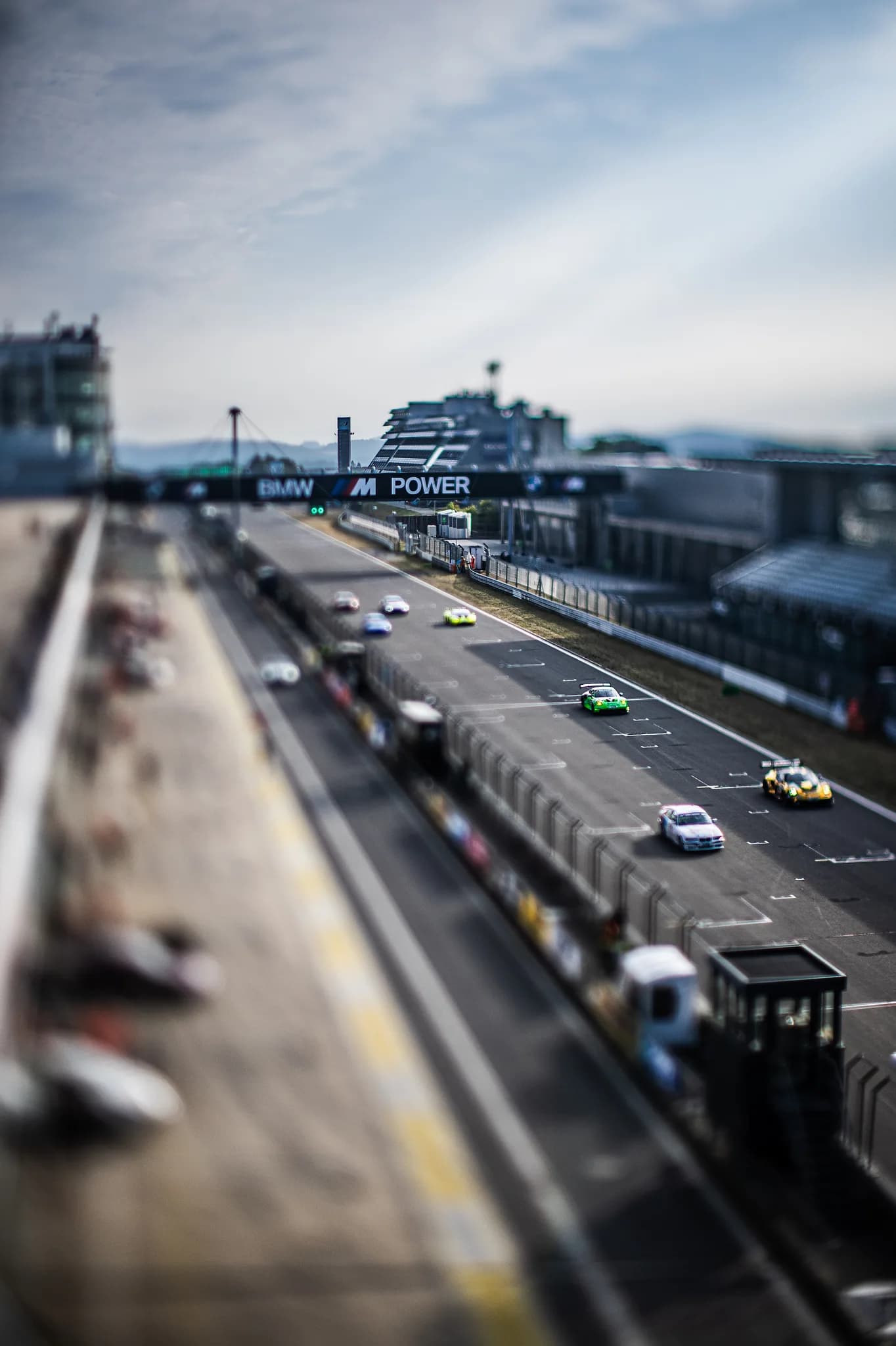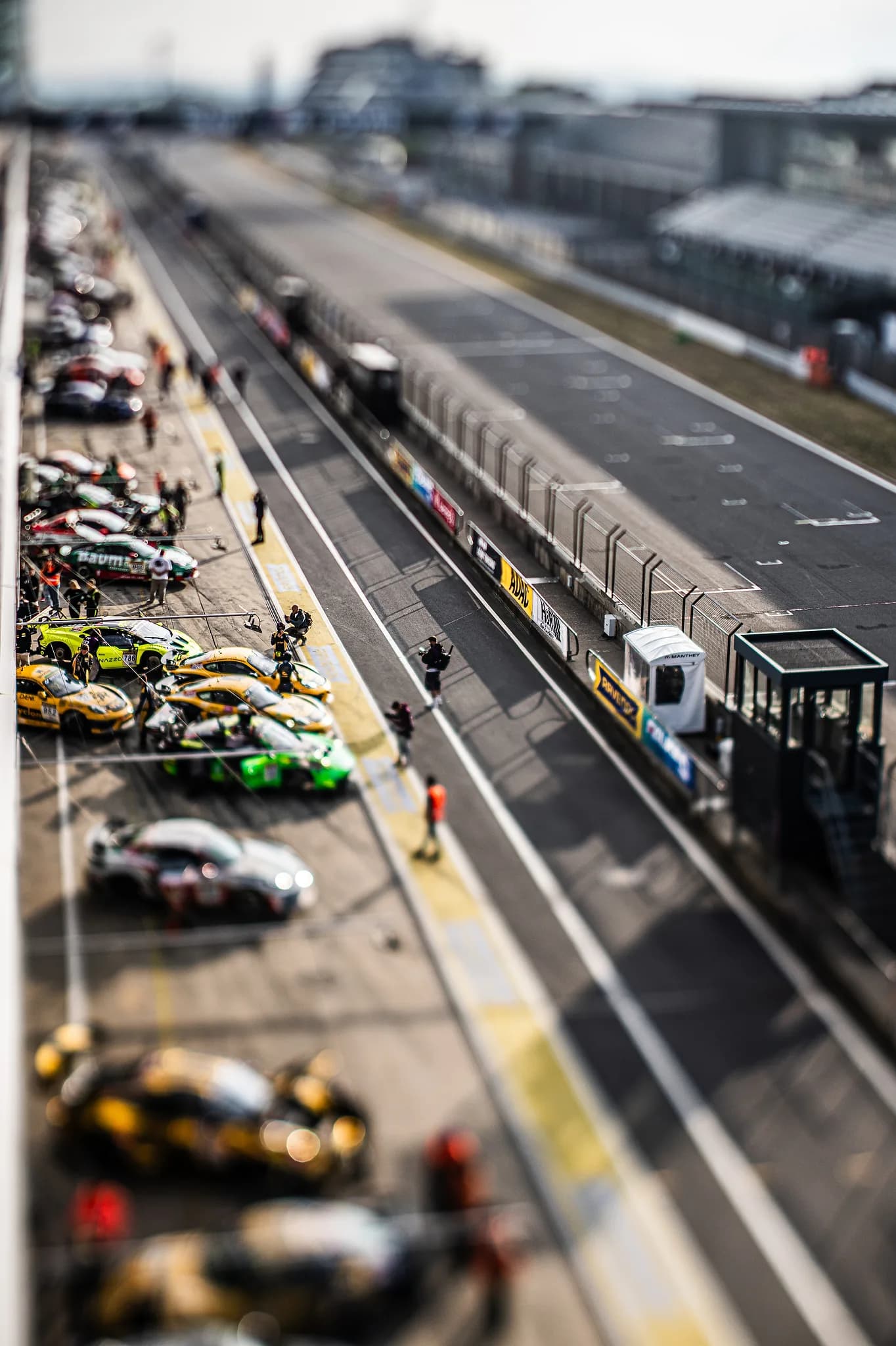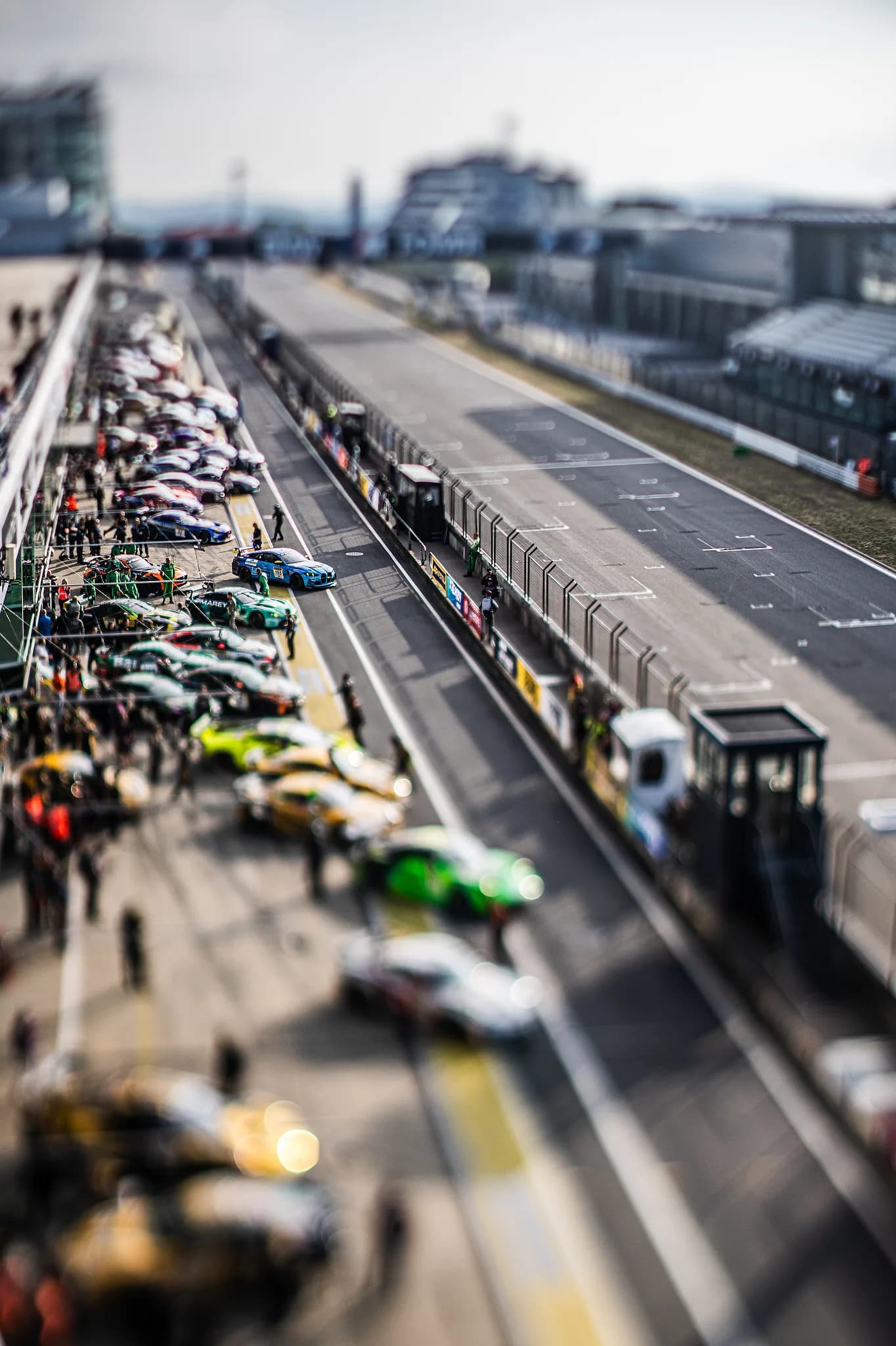
Precision Through Perspective: The Tilt-Shift Motorsport Experiment
Motorsport photography is often trapped in a single geometric formula: long glass, high shutter speed, frozen motion. Repeat.
Break the formula. Change the aperture, shift the focal length, bend the optical plane.
Creativity requires intentional friction. To test that edge, I brought a fully manual, budget-tier Viltrox 50mm f/1.4 Tilt Lens straight to the ultimate proving ground: the Nürburgring for NLS 7 (KW 6h ADAC Ruhr-Pokal-Rennen).
The Hardware Logic
No autofocus. No electronic communication. Pure manual geometry.
Autofocus algorithms are built for flat focal planes. They cannot process a tilted optical axis tracking a vehicle moving along a high-speed vector. You become the focus engine.
Build & Tactile Feel: Solid metal architecture. Weighty, mechanical, precise. Feels like vintage glass with modern intent.
The Focus Mechanism: Focus peaking is mandatory. You do not just turn a ring; you align the entire optical system by tilting the lens against the camera body.
Technical Observations
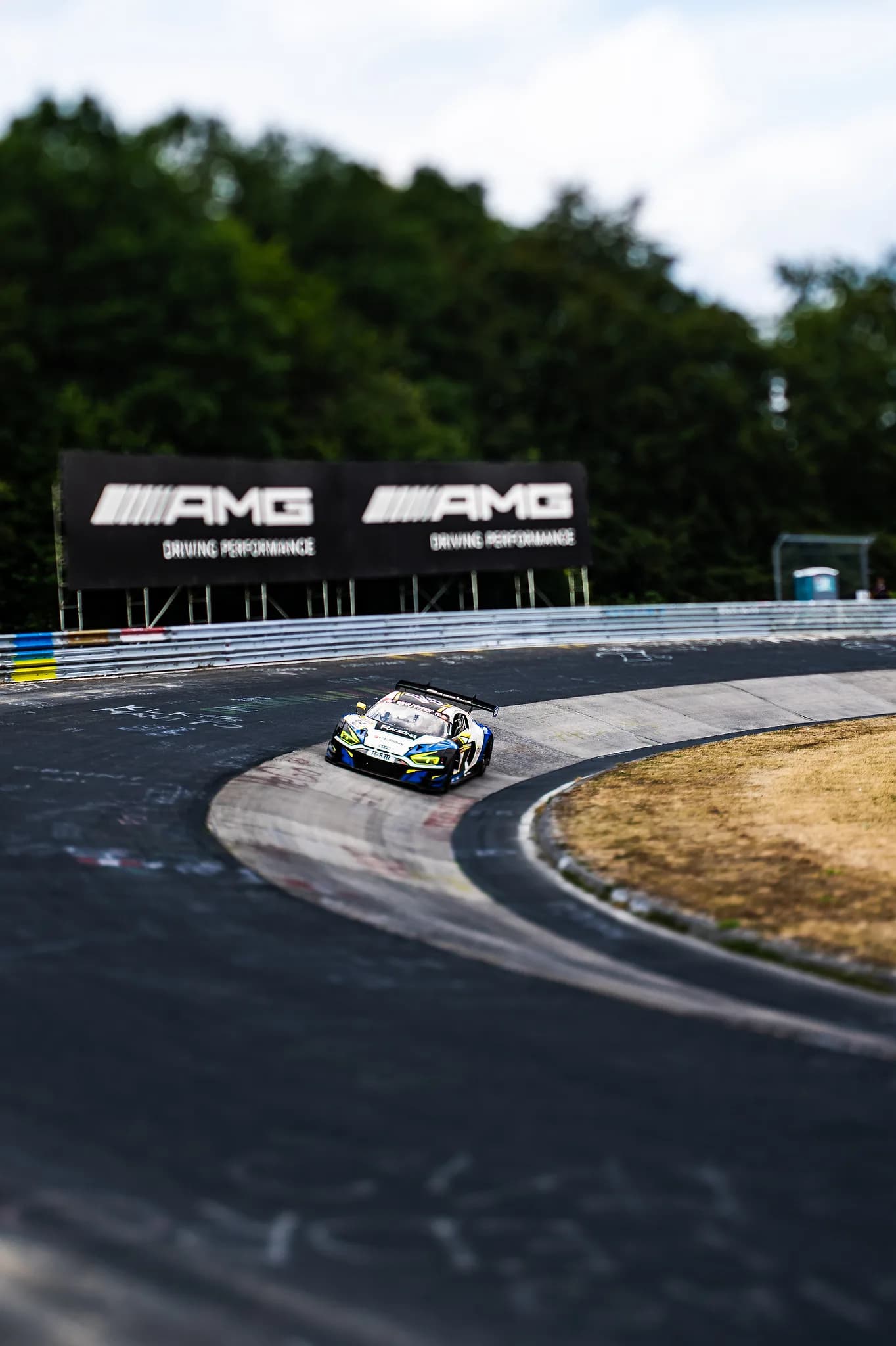
Optical Reality: Not surgically sharp, but sharp where it counts. The output has character.
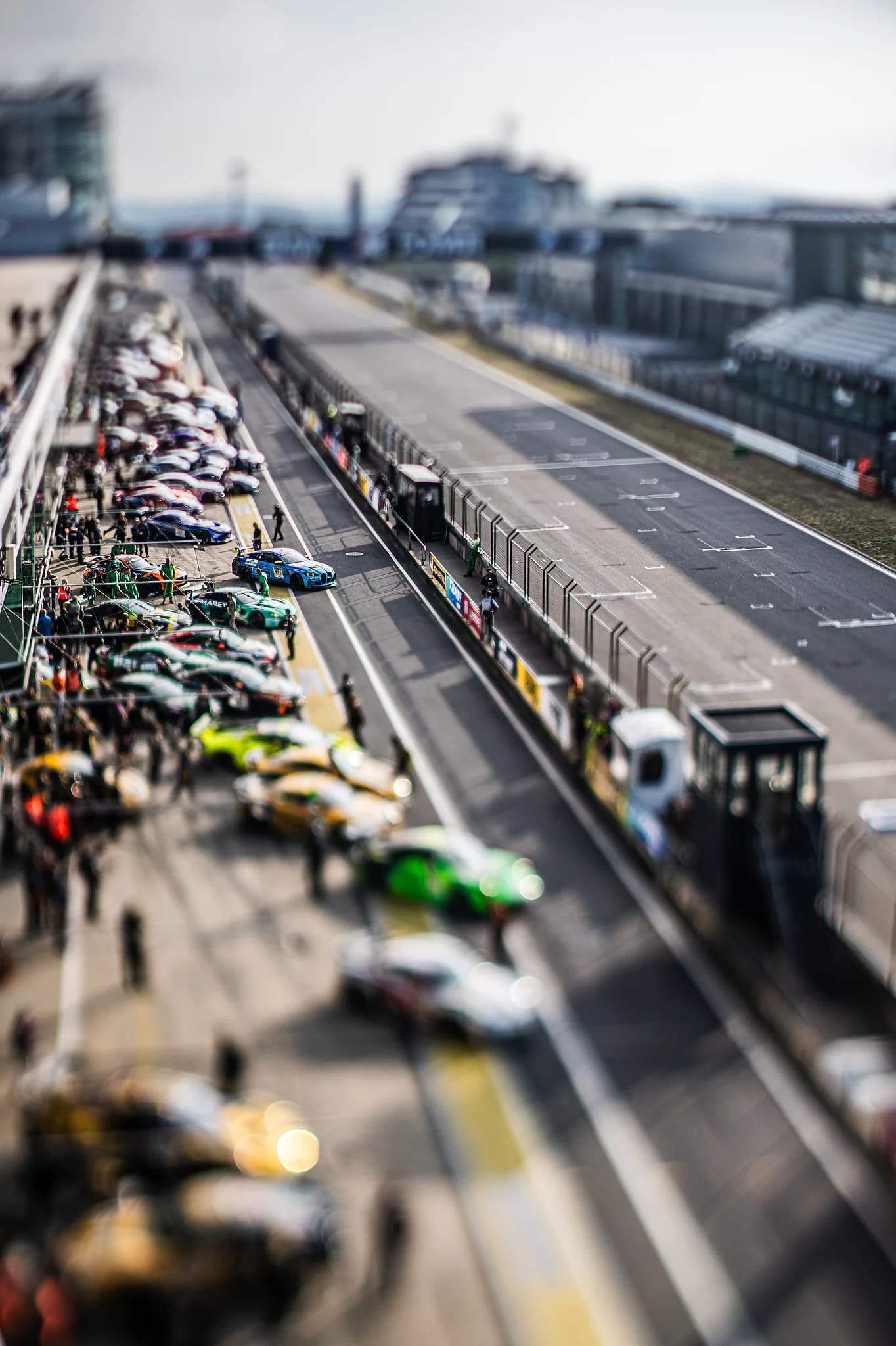
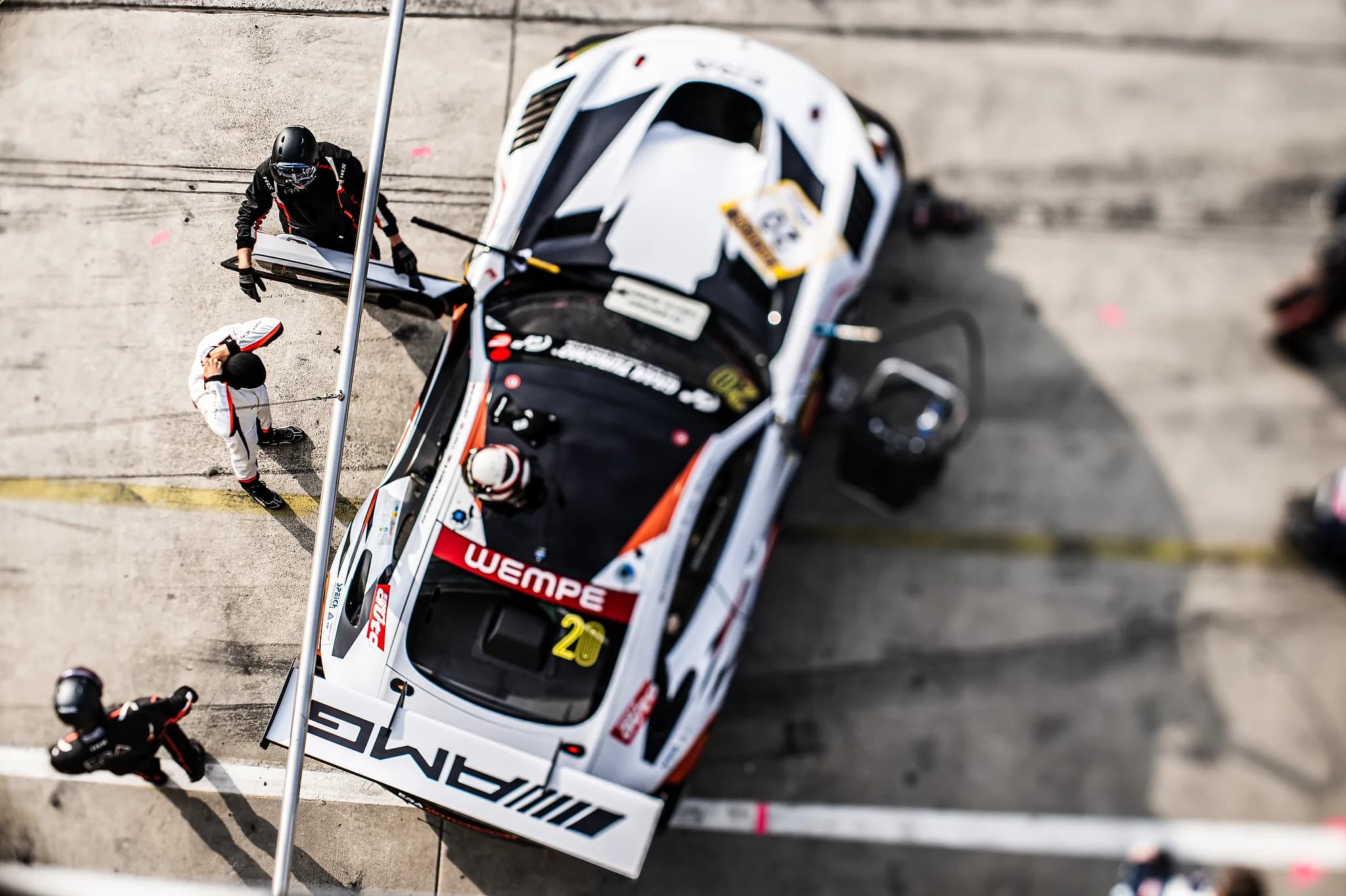
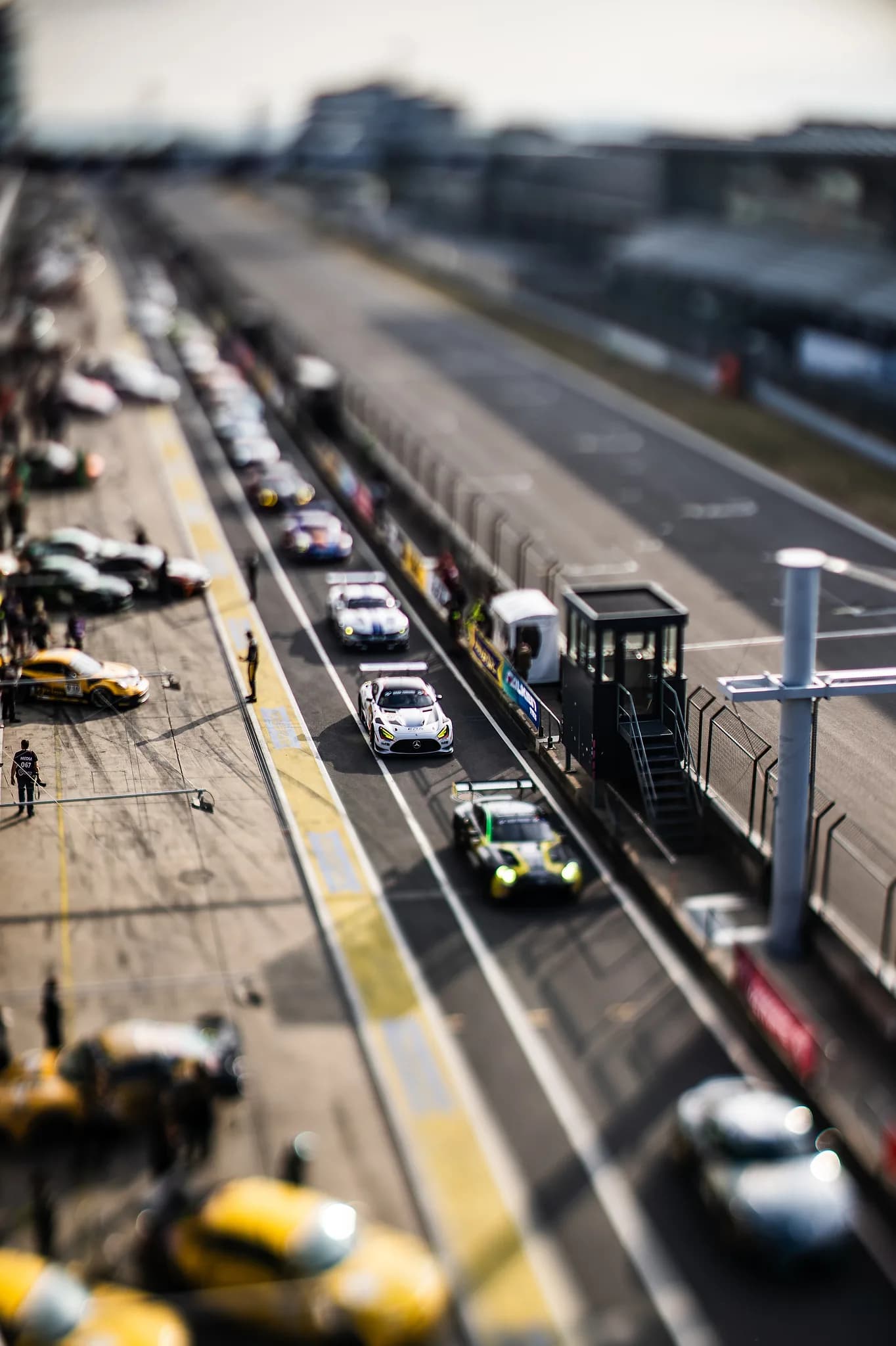
Selective Focus: From an elevated vantage point, the tilt axis distorts spatial scale. Massive, kinetic race cars collapse into static, miniature scale models.
Utility: This is not a primary lens on the barrier, nor was it ever meant to be. It is a targeted add-on built for specific moments of structural contrast.
The Verdict
It stays in the bag.
It won't take over your main trackside workflow. It isn't built for high-volume action. It exists to capture high-angle track vistas, static paddock details, and grandstand compositions from a completely different visual plane.
A low-friction, high-impact tool for the right moments.
Let’s Build What’s Next.